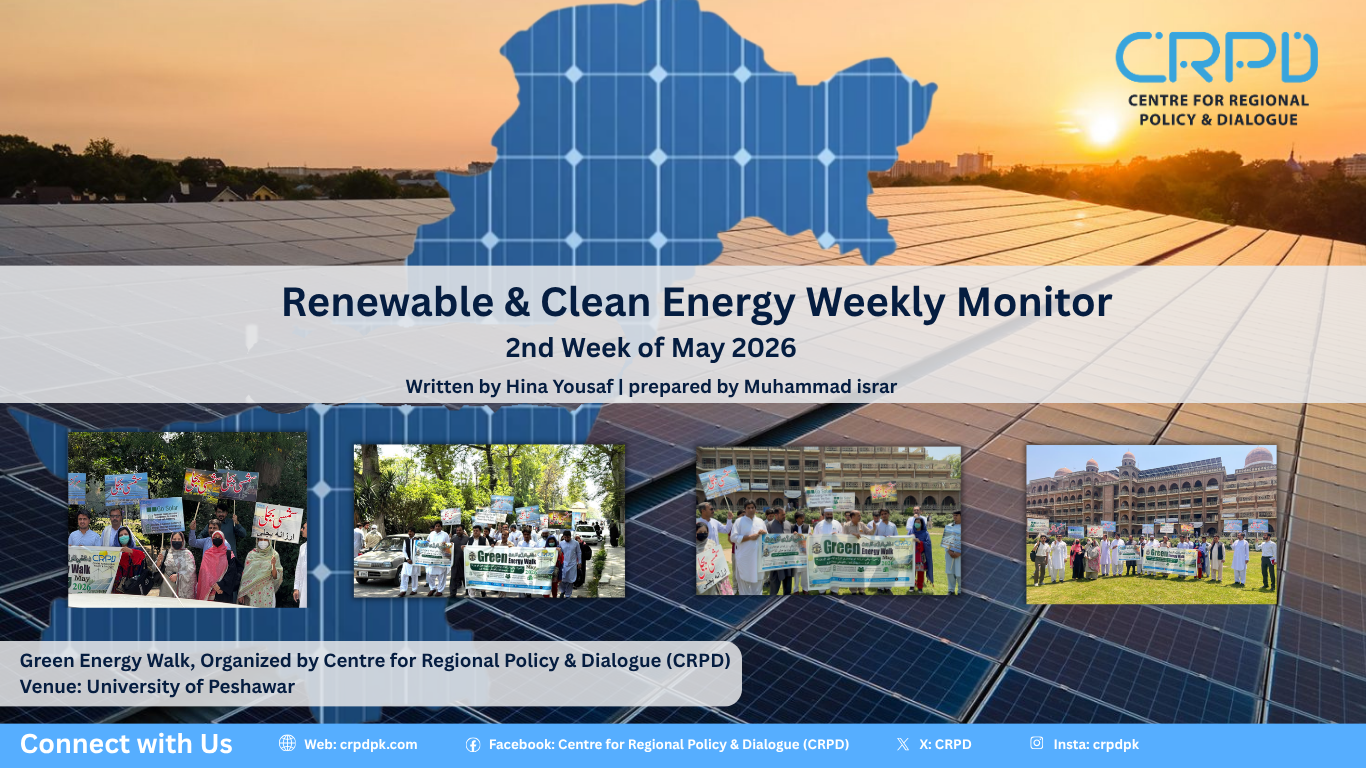
Written by Hina Yousaf
Prepared by Muhammad Israr
Week of May 2026
Pakistan’s renewable energy transition continues to accelerate, with major developments this week in solar energy, battery storage systems, and localized clean energy infrastructure. Rising electricity costs, growing solar adoption, and increasing interest in energy storage technologies are reshaping the country’s energy landscape.
Battery Storage Emerging as a Critical Energy Need
Energy experts this week emphasized that Battery Energy Storage Systems (BESS) remain the “missing link” in Pakistan’s ongoing solar transition. Speaking at the Breath Pakistan International Climate Conference 2026, experts highlighted that Pakistan’s rapid solarization helped reduce pressure on the national grid during recent regional energy disruptions, but warned that storage deployment is now essential for grid stability and long-term energy reliability. (Dawn)
The discussions noted that Pakistan imported nearly 50 GW of solar panels between 2021 and 2025, with almost half already installed across residential, commercial, and industrial sectors. (Dawn)
Growth in Local Battery Manufacturing
Pakistan is also witnessing increased investment in battery manufacturing and storage technologies. This week, Chinese company Dongjin Group announced plans to invest $15 million in a dry battery manufacturing plant in Faisalabad to support growing demand driven by electric vehicles and solar systems. The project is expected to contribute to local industrial activity and technology transfer. (Arab News)
Similarly, Zilo Lithium Batteries installed one of Pakistan’s most advanced lithium-ion battery assembly lines in Karachi’s Korangi Industrial Area, signaling growing domestic interest in energy storage production and renewable energy infrastructure. (ProPakistani)
Pakistani battery manufacturer Treet Battery Limited also launched its lithium-ion battery product line, “Lithion NeoPower,” targeting residential and commercial solar users amid Pakistan’s expanding solar market. (Business Recorder)
Hybrid Solar and Battery Projects Expanding
Industrial adoption of solar-plus-storage systems also continued this week. Pakistani industrial salt producer HubSalt signed an agreement with Chinese company LIVOLTEK to install a hybrid solar and battery storage system aimed at reducing diesel consumption, lowering emissions, and improving energy efficiency. The project includes a 1.44 MW solar PV system integrated with a 2.35 MWh battery storage system. (Arab News PK)
Government Focus on Energy Transition
Federal Energy Minister Awais Ahmad Khan Leghari stated this week that Pakistan is gradually reducing dependence on imported fuels for electricity generation while working toward reforms to rationalize electricity costs. (The Express Tribune)
The federal government has also reportedly initiated preparations for pilot grid-level battery storage projects while encouraging households with rooftop solar systems to integrate battery storage technologies. (Radio Pakistan)
Pakistan’s Expanding Solar Transition
Recent assessments suggest that Pakistan’s solar market continues to grow rapidly due to high electricity prices, chronic load-shedding, and falling solar technology costs. Analysts estimate that solar energy now contributes significantly to electricity consumption in several urban and industrial areas, while decentralized solar systems are increasingly becoming part of household energy planning. (EUReflect)
The broader shift toward decentralized solar and battery systems is increasingly being viewed not only as an environmental transition, but also as an economic and energy security strategy for Pakistan amid rising fuel import costs and grid challenges. (greencentralbanking.com)
Green Energy walk by the Centre for Regional Policy & Dialogue (CRPD)
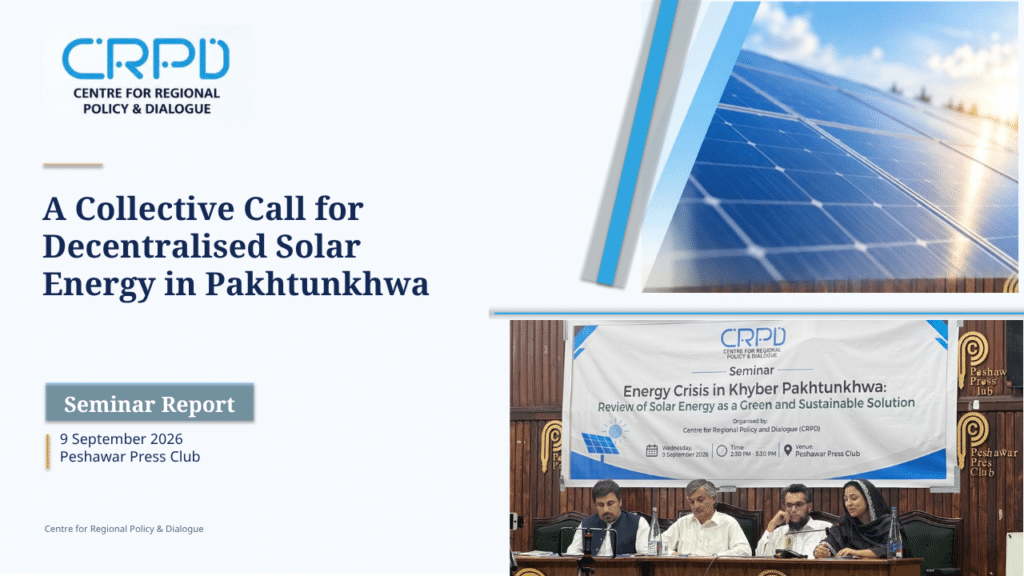
The Green Energy Walk, organized by the Centre for Regional Policy & Dialogue (CRPD) in collaboration with members of the Green Energy Jirga, civil society partners, and the Department of Criminology at the University of Peshawar, brought together students, academics, community leaders, and activists to advocate for a clean, affordable, and sustainable energy future in Pakhtunkhwa. The initiative highlighted Pakistan’s growing energy challenges and emphasized the urgent need to transition towards renewable energy, particularly solar power and battery energy storage systems (BESS), as viable solutions for reducing energy insecurity and environmental degradation. Participants called for key policy measures, including the removal of taxes on solar equipment, restoration of net metering, subsidisation of rooftop solar and storage systems, and expanded investment in decentralized energy solutions such as micro-grids and community-owned systems. The walk ultimately served as a platform to strengthen public awareness and promote community-driven engagement on sustainable energy transition. Centre for regional Policy & Dialogue (CRPD)