1. NEPRA makes battery storage mandatory for upcoming solar and wind auction
Battery storage
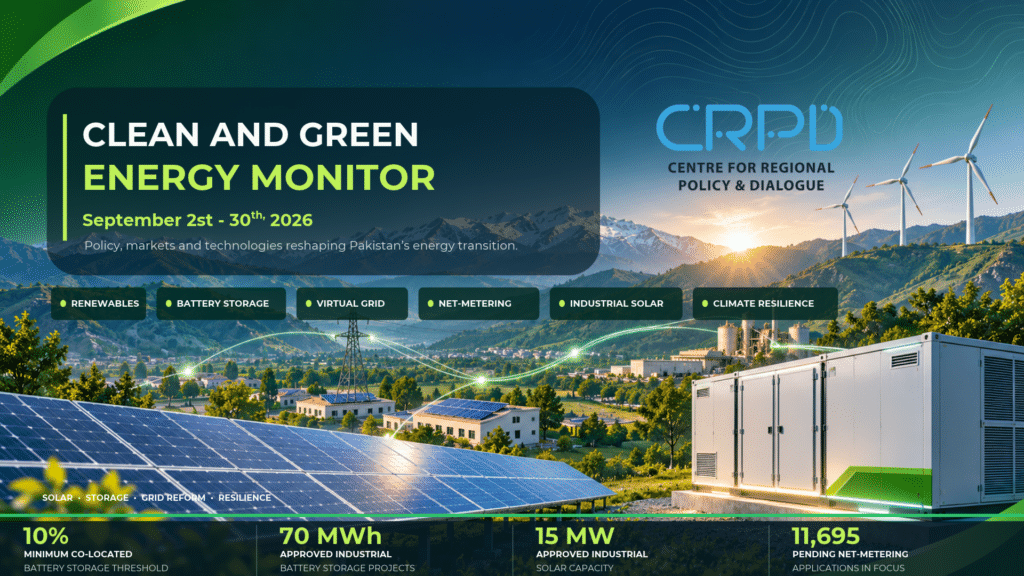
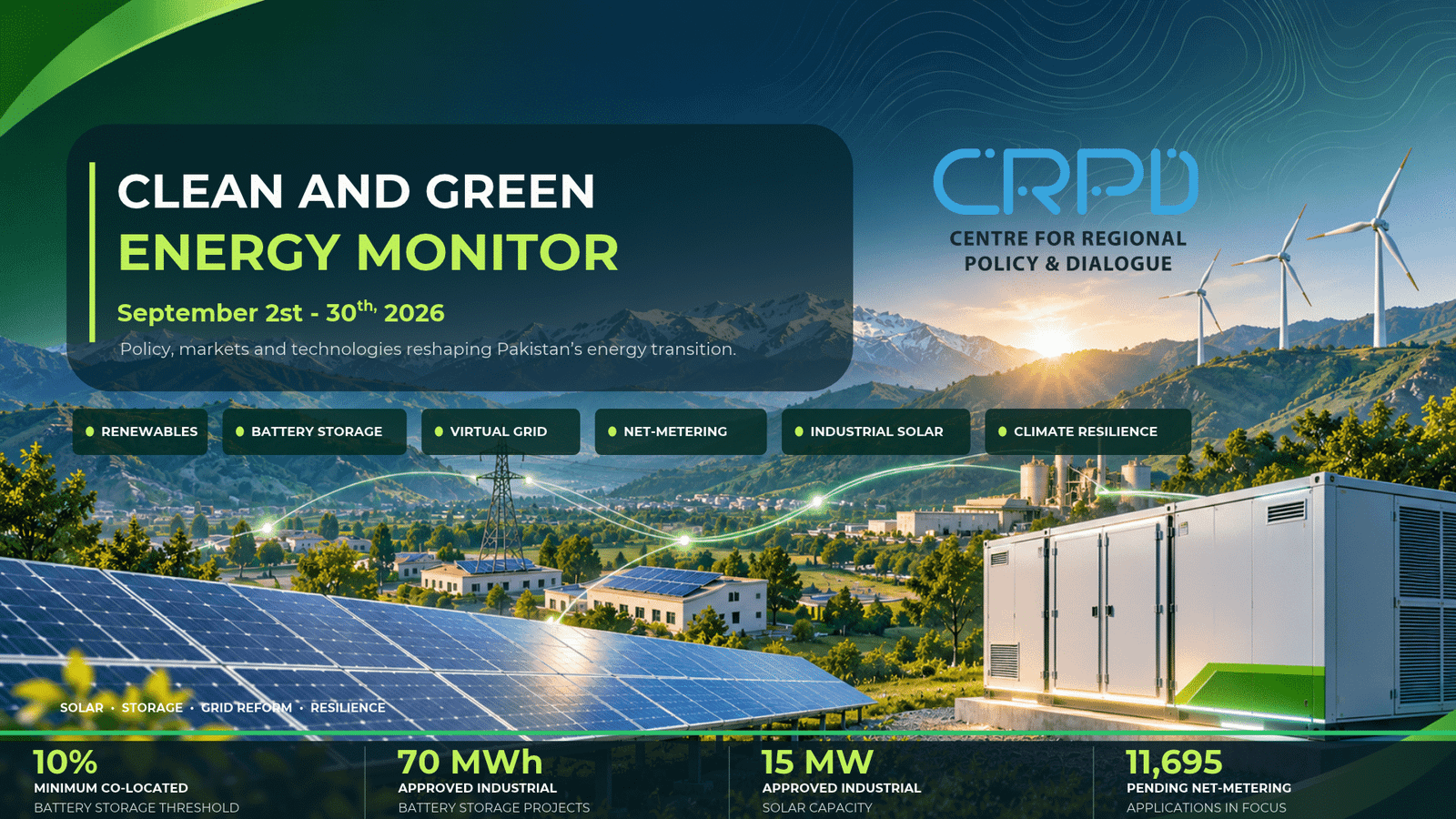
The National Electric Power Regulatory Authority (NEPRA) approved amendments to the Wheeling Auction Process, requiring renewable-energy projects participating in the upcoming auction to include co-located battery storage. Under the revised requirements, solar and wind projects must have battery storage equivalent to at least 10% of the firm capacity of the associated renewable-energy facility. The requirement is intended to improve grid flexibility and address the duck-curve challenge, in which solar generation reduces daytime grid demand but demand rises again during evening hours.
Source: Dawn – Mandatory battery backup for wind, solar.
2. Government clears 11,695 pending net-metering applications
Solar regulation
The federal government initiated the resolution of 11,695 pending net-metering applications following directions from the Power Division. The government also began directly contacting affected consumers to facilitate verification and processing. According to the report, 4,959 applications were still undergoing verification against relevant records and regulatory requirements. Consumers were advised that no additional payments were required to expedite their applications.
The development addresses administrative delays affecting rooftop solar consumers. Timely processing is important for maintaining public confidence in the country’s distributed solar market, particularly following changes to the net-metering framework.
Source: Dawn – Govt clears 11,695 net-metering applications.
3. Government plans virtual grid system to promote electricity storage
Virtual grid and BESS
Federal Power Minister Awais Ahmad Khan Leghari announced that the government was working on regulations for a virtual grid system, under which consumers would be able to generate and store electricity. The regulations were expected to be finalised by the last quarter of FY2026–27. The minister also stated that distribution companies had been directed to install batteries on their grids as part of wider efforts to improve electricity-system flexibility and promote energy storage.
A virtual grid framework could create opportunities for integrating distributed solar and storage into the wider electricity system. Its effectiveness will depend on clear rules governing consumer participation, metering, electricity exchange and compensation.
Source: Dawn – Govt working to introduce virtual grid system.
5. Fauji Cement approves 50 MWh battery storage and 10 MW solar project
Industrial solar and storage
Fauji Cement Company Limited approved the installation of 50 MWh of battery energy storage capacity alongside 10 MW of dedicated solar generation at its Nizampur and Jhang Bahtar plants. Each facility is planned to receive a 25 MWh battery system and a 5 MW solar installation. The company expects the project to be completed within ten months of commencement. The battery systems are intended to store daytime solar electricity for use during evening peak hours.
The project is particularly relevant to Khyber Pakhtunkhwa because one of the installations is at Nizampur. It demonstrates the growing role of industrial solar-plus-storage systems in reducing dependence on peak-hour grid electricity and managing energy costs.
Source: Profit – Fauji Cement approves 50 MWh battery storage, 10 MW solar project.
6. Attock Cement approves 20 MWh battery storage and 5 MW solar installation
Industrial BESS
Attock Cement Pakistan Limited approved a 20-MWh battery energy storage system alongside a dedicated 5 MW solar installation at its plant. According to the company’s notice to the Pakistan Stock Exchange, the project aims to reduce reliance on peak-hour grid electricity, optimise energy expenditure and increase the company’s renewable-energy capacity.
The approval adds to the growing number of industrial consumers investing in solar generation combined with battery storage. It also reflects the increasing commercial interest in managing peak electricity costs through on-site energy systems.
Source: Mettis Global – Attock Cement to install 20 MWh battery storage, 5 MW solar.
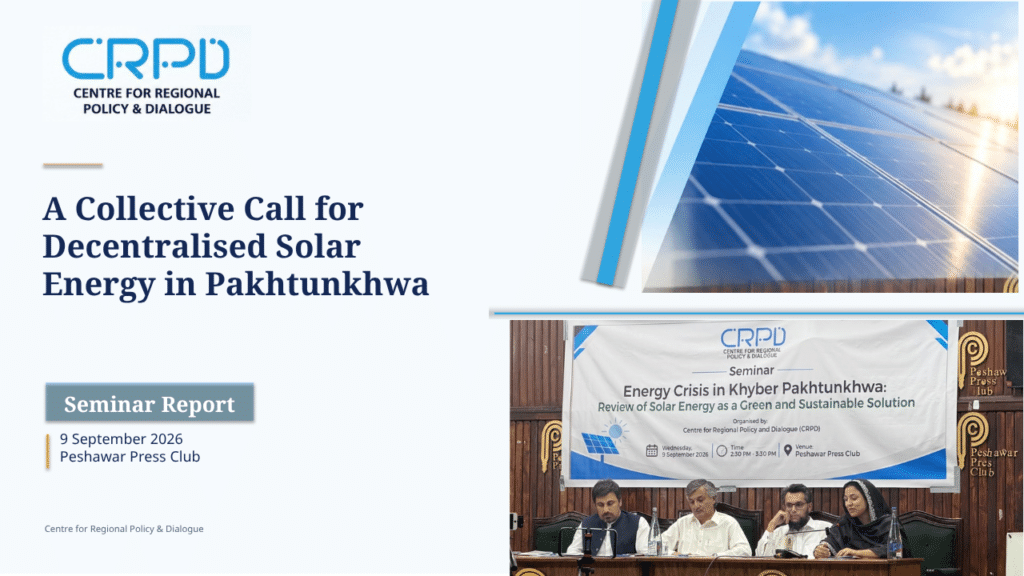
7. CRPD seminar calls for decentralised solar systems backed by battery storage in Khyber Pakhtunkhwa
Khyber Pakhtunkhwa solar and BESS advocac
Experts and policymakers at a seminar organised by the Centre for Regional Policy and Dialogue (CRPD), titled “Energy Crisis in Khyber Pakhtunkhwa: Exploring Solar Energy as a Green and Sustainable Solution”, called for promoting decentralised solar systems supported by battery storage to address the province’s persistent electricity challenges.
Participants highlighted the structural and administrative constraints of the centralised electricity system despite Pakhtunkhwa’s substantial energy resources. Discussions also addressed the environmental and social impacts of large hydropower projects, the potential of solar energy for faster deployment, and the need for stronger provincial authority over electricity generation, transmission, distribution and energy revenues.
Speakers stressed that solar panels alone would not resolve the province’s energy challenges without battery storage, efficient distribution systems and a comprehensive provincial energy policy.
The discussion reinforces the case for a decentralised energy model in Khyber Pakhtunkhwa, with solar and storage integrated into local electricity systems and supported by stronger provincial energy governance.
Source: Dawn – Decentralised solar power system proposed.
8. EU and Pakistan sign €65 million financing agreements, including energy and environmental resilience programme for Khyber Pakhtubkhwa
Climate and energy resilience
The Government of Pakistan and the European Union signed three grant agreements worth a combined €65 million, approximately Rs20.64 billion. One of the programmes is titled Energy and Natural Environment Resilience in Khyber Pakhtunkhwa. The agreements form part of the EU’s Global Gateway cooperation and its Multiannual Indicative Programme for 2021–2027.
The programme represents an important financing commitment towards energy and environmental resilience in Khyber Pakhtunkhwa. Its detailed implementation priorities and allocation for specific renewable-energy or solar interventions should be assessed through the programme documents before attributing particular projects or technologies to it.
Source: Press Information Department – EU and Pakistan sign €65 million financing agreements
9. Green Energy Jirga calls for decentralised solar and battery storage solutions in Khyber Pakhtunkhwa
The Centre for Regional Policy & Dialogue (CRPD) organised Green Energy Jirga at the Department of Criminology, University of Peshawar, bringing together political representatives, academia, energy experts and civil society stakeholders to discuss Khyber Pakhtunkhwa’s energy challenges and sustainable alternatives. The discussion examined the limitations of the centralised electricity system, the gap between the province’s energy production and local access, and the environmental and social implications of large-scale hydropower development.