Adnan Ali Khan
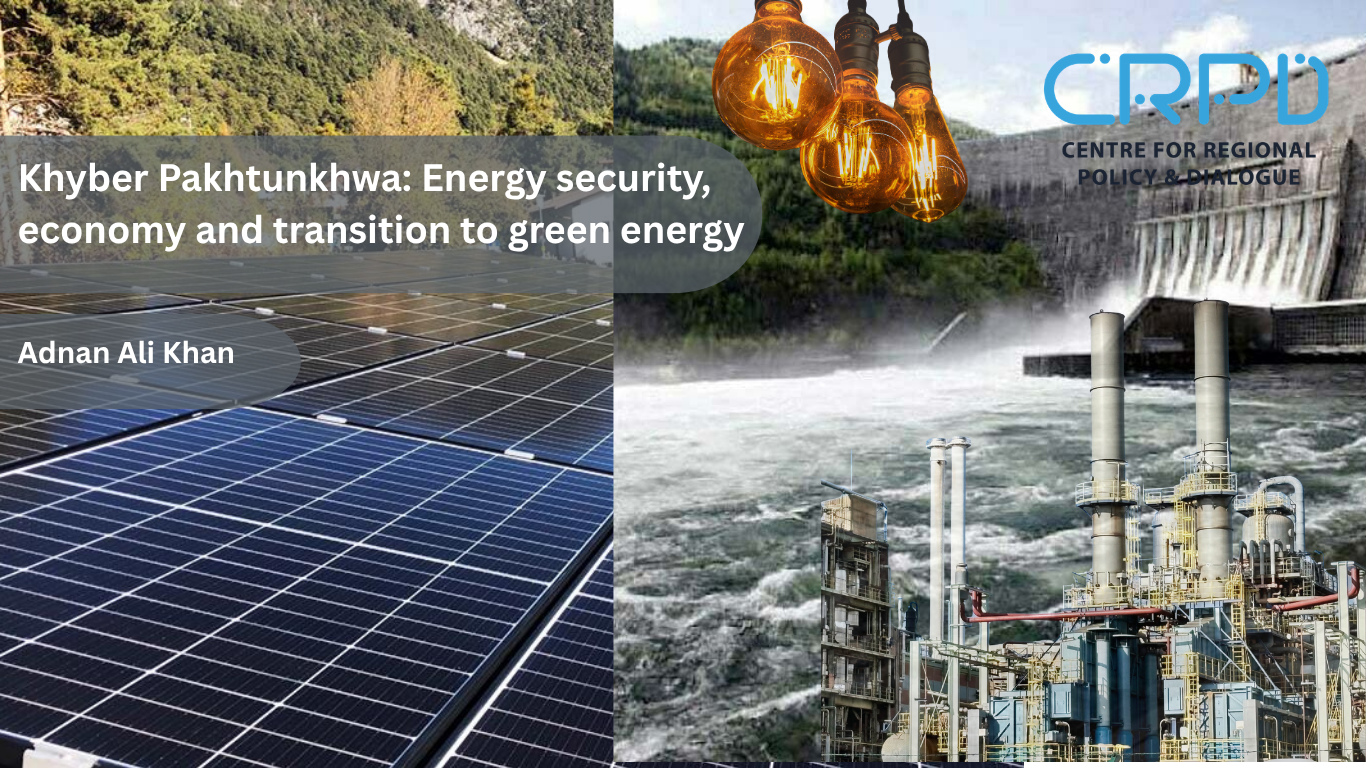
The recent Middle East crisis and the consequent blockage of the Strait of Hurmuz exposed the faultlines in the energy policy of Pakistan. The structural flaws in the energy policy have long been observed to be reliance on imported fossil fuels (RLNG, oil and coal, etc.), centralisation of grid, systemic imbalance in the process of distribution, and outdated transmission lines. A large chunk of the Gross Domestic Product (GDP) of Pakistan is either spent on the imported fossil fuels, large scale extraction of indigenous fossil fuels and construction of mega dams or maintaining a centralised grid.
Recent studies have discovered large gaps in the security, reliability, affordability and just transition to renewables and green energy in Pakistan (https://www.sciencedirect.com/science/article/pii/S2590123025045815) (https://www.mdpi.com/1996-1073/18/14/3821). The uneven and highly centralised energy policy of Pakistan is also reflected in the federating units of Pakistan, particularly in Khyber Pakhtunkhwa, which is bearing the brunt of the flawed energy policy.
Pakistan must urgently accelerate its transition to green energy even if the recent Middle East crisis is resolved. Any conflict in the region threatens the stability of the Strait of Hormuz, a key global oil supply route. A disruption in this route can severely affect Pakistan’s energy imports and economic stability. Rising oil prices can increase inflation and place a heavy burden on Pakistan’s economy. Pakistan’s heavy dependence on imported fossil fuels makes it highly vulnerable to such global crises. Therefore, shifting toward renewable energy is no longer a choice but a necessity. Solar energy offers a clean, abundant, and cost-effective solution for the country(https://www.energy.gov/energysaver/benefits-residential-solar-electricity).
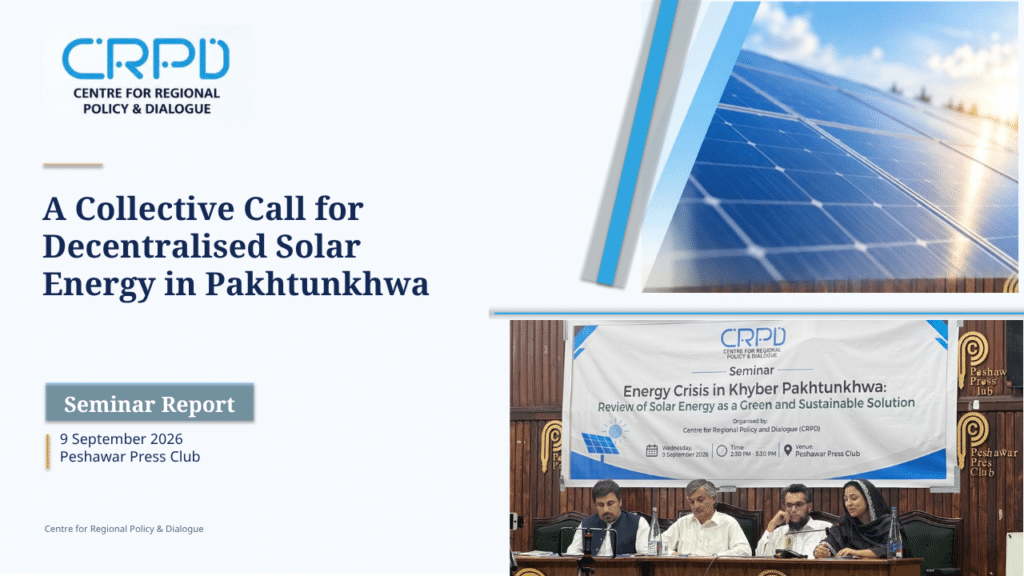
Eliminating taxes on solar equipment can make it more accessible to the public. Elimination of the recent Prosumer Policy, flexibility in the grid, facilitation of developing micro and mini grids, and subsidisation of Battery Energy Storage System (BESS) are some of the short-term measures Pakistan can take if she wants to create a regime of secure, affordable, reliable and green energy. Solarisation has been observed to have provided Pakistan, and particularly Khyber Pakhtunkhwa, with the much-needed cushion in the era of global energy crisis.
A large population of Khyber Pakhtunkhwa depends on transportation businesses. The Pakistan’s Electric Vehicles Policy needs to be revised so that three wheelers and four wheelers are facilitated in the short term, i-e., before 2030. Electrification of two wheelers, three wheelers and four wheelers will not only provide for affordable transportation but will also be considered a large stride towards a green energy regime for climate resilience, mitigation and adaptation. Khyber Pakhtunkhwa does not produce large quantity of greenhouse gases but is one of the most affected areas which is observed every year in the form of flash floods, seasonal fluctuation, Glacial Lake Outburst Floods (GLOFs) and cloud burst floods. The northern and southern districts of Khyber Pakhtunkhwa are extremely vulnerable to the climate disasters (https://www.researchgate.net/publication/394974313_August_2025_Flash_Floods_in_Khyber_Pakhtunkhwa_Pakistan_A_Detailed_Examination)
In addition, the province has significant potential for hydropower generation due to its abundant water resources and mountainous terrain. The installation of mini and micro hydropower projects can provide a reliable and low-cost source of electricity. Hydropower is a clean and renewable energy source that reduces greenhouse gas emissions and environmental pollution. It can also create employment opportunities and promote local economic development. Micro hydropower projects are particularly suitable for remote areas, ensuring energy access and reducing transmission losses. Moreover, micro and mini hydropower plants have a long operational life and low maintenance costs, making them a sustainable investment. By combining solar energy expansion with hydropower development, Khyber Pakhtunkhwa can achieve energy security, reduce reliance on fossil fuels, and build a resilient and sustainable energy system for the future (https://www.sciencedirect.com/science/article/pii/S2211467X21001140)
Small, micro and mini hydropower projects—that do not bring about negative ecological impacts and do not force displacement of the indigenous population—can benefit remote and underserved communities if the issues related to distribution, transmission and flexibility of grid are resolved (https://hdl.handle.net/10986/20314). While designing the mini and micro hydropower projects, one needs to proceed with extreme caution that the natural flows of rivers and ravines are not diverted otherwise springs may be dried up, indigenous flora and fauna may be damaged beyond repair, and the indigenous livelihood systems will be disrupted. This is what we have seen in the case of hydropower projects on the River Swat, Neelum-Jhelum Hydropower Project and Ghazi Barotha. The promotion of off-grid and micro-grid systems can reduce pressure on the centralised grid.
Green energy can also create jobs and support sustainable economic growth. It helps reduce environmental pollution and combats climate change. Investing in renewable energy strengthens national energy security and independence. This critical moment should be used as an opportunity to transition toward a cleaner and more resilient energy future.
Khyber Pakhtunkhwa is facing a persistent energy crisis marked by power shortages, unreliable supply, and rising costs. To address this challenge, the provincial government should eliminate all taxes and tariffs on solar energy components, including solar panels, glass, and storage batteries, to make renewable energy more affordable and accessible. Integrating solar systems into the centralised grid can enhance energy stability, while the development of small-scale and micro-grids at the community level can ensure reliable electricity in remote and underserved areas. Furthermore, promoting off-grid solar solutions can reduce dependence on conventional energy sources and support a cleaner energy mix.