
Adnan Ali Khan
January 2026
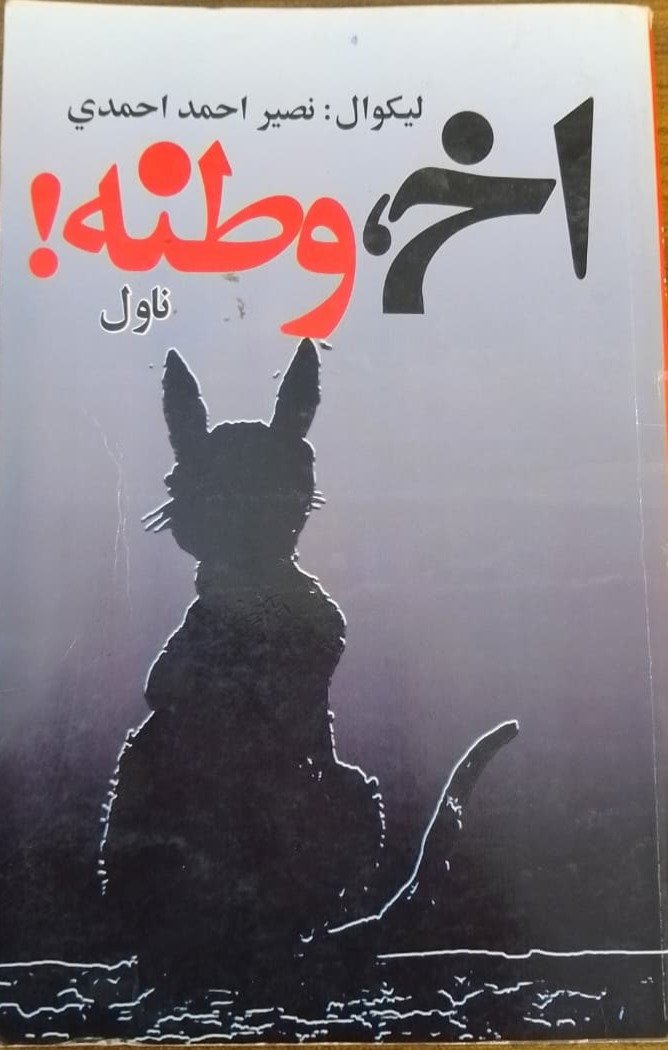
Alas! My Homeland (Akh Watana in Pashto) is a deeply moving and provocative Pashto novel written by Naseer Ahmad Ahmadi that urges readers to reflect critically on themselves, their society, and their homeland. Ahmadi candidly spells out bitter realities of Afghan society through the language of animals living in the house of Raham Dil. The main character of the novel is a cat who describes moral, cultural, and religious faultlines of Afghan society based on her eleven years of life in Raham Dil’s house.
The unpleasant realities of Afghan society are consistently reflected through the language of animals in the novel. The animals themselves seek refuge among humans in Afghan society. The novel brings to light that women in Afghan society face inferiority, oppression, and a lower standard of living than men.Animals such as the cat, duck, hen, dog, goat, cow, and crow speak about the lives of people from two different societies. In Akh, Watana, the conversations between the animals, especially between the cat and the duck (Helai)—make the story quite engaging.
One day, Raham Dil shot a duck while hunting and brought her to his house. The duck was lucky because she was still alive; only one of her wings was broken. There, the duck met other animals living in the house. She was very worried, but the hen and the cat welcomed her warmly. They talked to the duck and told her not to worry. Then they began telling her about the behaviour of the people living in the house (Raham Dil’s family). The duck became even more worried because she was new there. She had visited other countries before and felt very strange in this place. She told them that these people were bad because they were not like the people living in other countries.
The cat highlights the oppression of women, the humiliation of daughters, the persistent culture of warfare, the destruction of educational institutions, and the hostility of brother against brother. He further illustrates that in this society, the acceptance of bribes is regarded as a mark of intelligence, whereas honesty and devotion to one’s country are dismissed as signs of ignorance.
The cat exposes the social evils, destructive practices, gender discrimination, moral shortcomings, misfortunes, and limitations of Afghan society through her account of Raham Dil, the owner of the house. She reveals the cruelty shown toward family members, women, elders, relatives, villagers, and even animals. Basic rights are violated, daughters are compelled to view their own dignity and honor as a source of shame, bridges are destroyed, and agreements are made to burn down schools. The devastation of the nation’s infrastructure becomes a means of livelihood for such individuals. Brothers are regarded as enemies, and there is not a single day when there is no conflict. In contrast, the duck describes the love, compassion, prosperity, and social harmony found in developed societies.
She described that in developed countries, parents loved their children without discrimination, treating them equally, joyfully, and with a sense of pride. Children were not forced into labour; rather, parents took full responsibility for their education and their right to have a happy and secure life. Moreover, people in those societies demonstrated care and respect for animals and nature. Instead of harming birds, they provided them with food and felt delighted when the birds approached them for feeding.
One day the duck asked a quation that had been pricking her mind since she had joined other animals in Raham Dil’s house: “Are other people not different from Raham Dil? Do they possess any sense of patriotism?” The cat remained silent for a moment, then raised her head and replied, “Duck, I have traveled extensively through these villages. Ninety-five percent of the people here are like Raham Dil.” The cat explains some of the major issues of the villagers. She recounts that one day; while passing by a boys’ school, she saw the principal standing with two shopkeepers, engaged in selling schoolbooks and notebooks for profit. She also describes seeing a doctor speaking happily on a mobile phone, assuring someone not to worry, as he would prescribe expired medicines to patients in exchange for a forty percent share of the profit. One day, I observed three clean-shaven men standing on a newly constructed road. Listening closely, I realized they were angrily accusing one another of stealing construction materials, workers’ wages, and fuel. Each pointed fingers at the others, claiming, “You have taken a great deal, while very little is left for me.”
The Duck says with frustration, “Whom should we complain to? Everyone here appears to be a thief in his own way. The cat remarks that, although some people are kind-hearted and virtuous, they are surprisingly rare. She recalls observing a man whose wife had just given birth to a child; he was diligently fetching water from the pond. Despite his dedication, the villagers ridiculed him, labeling him “woman’s dog” (da khazy spai).
I observed an officer who refused to accept bribes, she said. His colleagues regarded him as foolish, and even his family was somewhat astonished, noting that others had received cars for the same simple assignment, yet he had not benefited in any way. The duck asked the cat why these people were so proud of their ancestors and why every statement they made was rooted in five thousand years of history, ancient knowledge, and inherited pride. While the cat and the duck were engaged in this discussion, a crow came and sat on a nearby tree. The cat asked the crow, “How old are you?” The crow replied, “I am about one hundred and seventy years old. But why do you ask my age?” The cat then asked the crow the same question and requested an explanation: “why are these people so proud of their ancestors? Were their ancestors truly brave and patriotic?
The crow told them that he had been living there for the past one hundred and seventy years and that these negative habits had been passed down from generation to generation. Raham Dil’s ancestors were no different from Raham Dil himself. They preferred to sleep both day and night and showed energy only when fighting among themselves, particularly with their cousins. They were opposed to education, development, planning for a brighter future, and patriotism. Instead, they were involved in unethical activities for the sake of money.
The crow further explained that he had encountered only a few individuals who were true lovers of the homeland. These people struggled tirelessly to awaken society and guide it toward a better life; however, they were labeled as enemies and ultimately destroyed.
In the end, the cat wished that these people could reform themselves and abandoned all their bad habits. She stated that such change was entirely possible if it came from within. It required no cost, yet in return it could lead to the development of the country and a secure life for everyone.